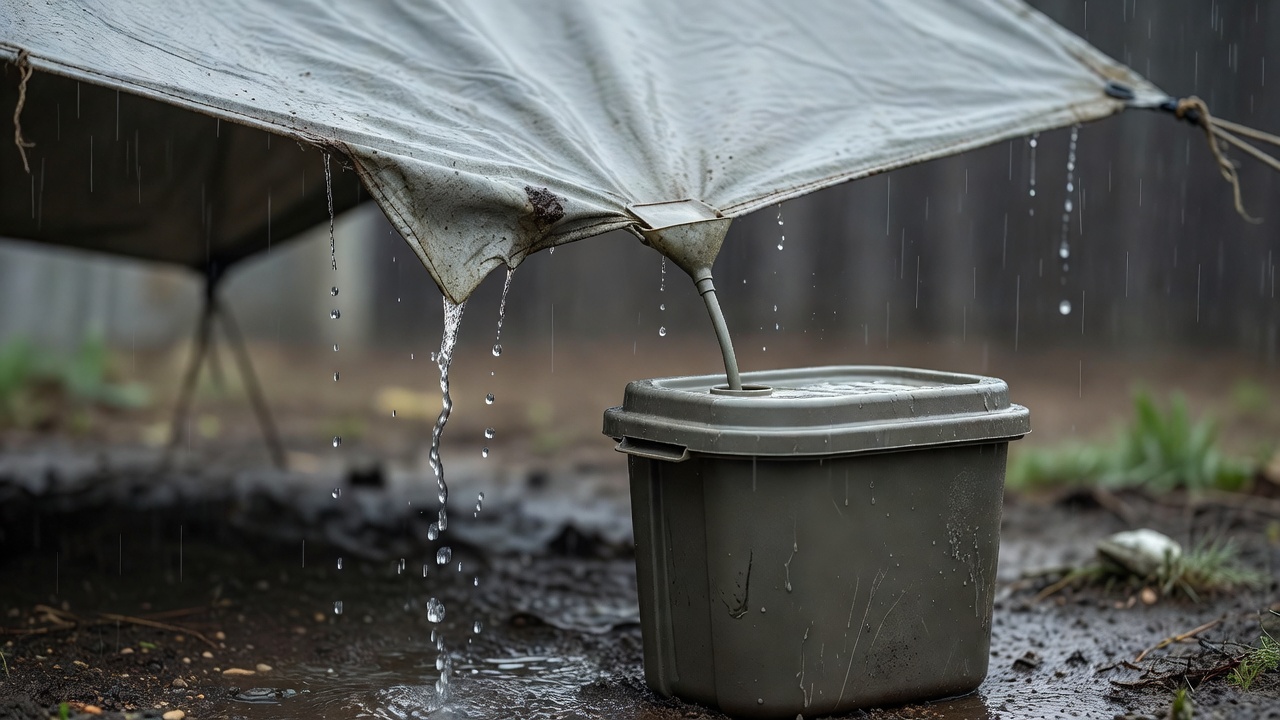
Choose a narrow, useful purpose
A first prototype should answer a simple question: can you direct runoff into a stable container without making a muddy mess? At home, that can be an observation exercise. At a campsite, collected water might be suitable for rinsing muddy pegs or similar non-food equipment if local rules permit. Even non-drinking use needs judgement about exposure and disposal.
Do not use this prototype for drinking, cooking, brushing teeth, washing produce or cleaning wounds. Keep it away from the food-preparation area. Water for hands and food-contact equipment should meet the relevant public-health requirements; do not assume utility water is suitable merely because it looks clean.
Inspect the catchment and container
Use a small, intact sheet with known material history and clean handling. A reclaimed advertising banner, chemically treated roof sheet or unknown industrial tarpaulin is a poor choice. This guide does not certify a fabric as suitable for potable-water collection. A suitable container should be clean, closable, stable and never previously used for fuel, pesticides or other hazardous substances.
Prototype packing list
- A small intact catchment sheet and existing attachment points.
- Short cord and appropriate anchors for a low, stable setup.
- A clean lidded utility-water container with a clear label.
- A removable coarse screen to intercept larger debris only.
- A measuring jug reserved for this experiment and a notebook.
Label the container “NOT FOR DRINKING” on more than one side. Do not use a familiar drinking bottle as the receiver. Store the collected water apart from potable supplies so a tired camper cannot easily confuse them.
Set up low and keep it attended
- Check permission. Confirm collection rules, campsite restrictions and whether attaching lines to vegetation is allowed. At home, check applicable local requirements.
- Choose the ground. Avoid vehicle runoff, overhead contamination, fragile vegetation and places where overflow would erode soil.
- Make a modest slope. Support the sheet so water moves toward one low corner without forming a heavy suspended pocket.
- Position the receiver. Place the container on stable ground. Arrange an inlet that limits debris without pretending the container is sealed during collection.
- Plan the overflow. Direct excess away from tents, paths and cooking areas, consistent with site rules.
- Observe from nearby. Stop the experiment if wind, pooling, slipping anchors or lightning makes tending it unsafe.
Keep lines low-profile, visible and out of paths. Do not make a large overhead water bag. Water is heavy: one litre has a mass of approximately one kilogram. A shallow sag can quickly place a surprising load on fabric and anchors.
Measure collection, not safety
Measure the horizontal catchment area, rainfall depth if available and the volume actually collected. One millimetre of rain falling on one square metre represents one litre before losses. A 1.5 square metre catchment under 4 millimetres of rain therefore has a theoretical yield of 6 litres. Wind, splash, leaks and retained water reduce the amount reaching the container.
This calculation says nothing about water quality. Discarding initial runoff may reduce some debris, but a homemade first-flush arrangement is not proof of safety. A coarse screen does not remove dissolved contaminants and is not a reliable pathogen barrier. Avoid collecting near smoke, chemical contamination or other evident hazards.
Write down the conditions and any visible fouling. If animals contact the setup or contamination is suspected, stop using the collected water. Never taste it as a test.
Understand the treatment boundary
Boiling can address many disease-causing organisms when done correctly, but it does not remove many chemical pollutants. Filters have different capabilities; a camping filter’s claims should be read carefully, including what it does not remove. No single generic treatment instruction can account for every catchment, contaminant and health risk.
If you intend to establish a drinking-water system, seek advice from the relevant public-health authority and use equipment, testing and maintenance appropriate to the actual hazards. Read the CDC overview of collecting rainwater and health and the EPA emergency drinking-water disinfection guidance for context. Emergency disinfection guidance does not certify this prototype or solve chemical contamination.
Close the experiment properly
Do not leave standing water unattended or store it indefinitely. Empty utility water only where disposal is permitted, without creating erosion or contaminating natural water sources. Clean and fully dry the sheet, screen and container before storage. Do not release soap or treatment chemicals into a stream.
Keep your dependable drinking supply unchanged after the experiment. The useful outcome is a better understanding of collection, handling and limitations—not confidence that an improvised catchment can replace a safe source.