Begin with one ordinary meal
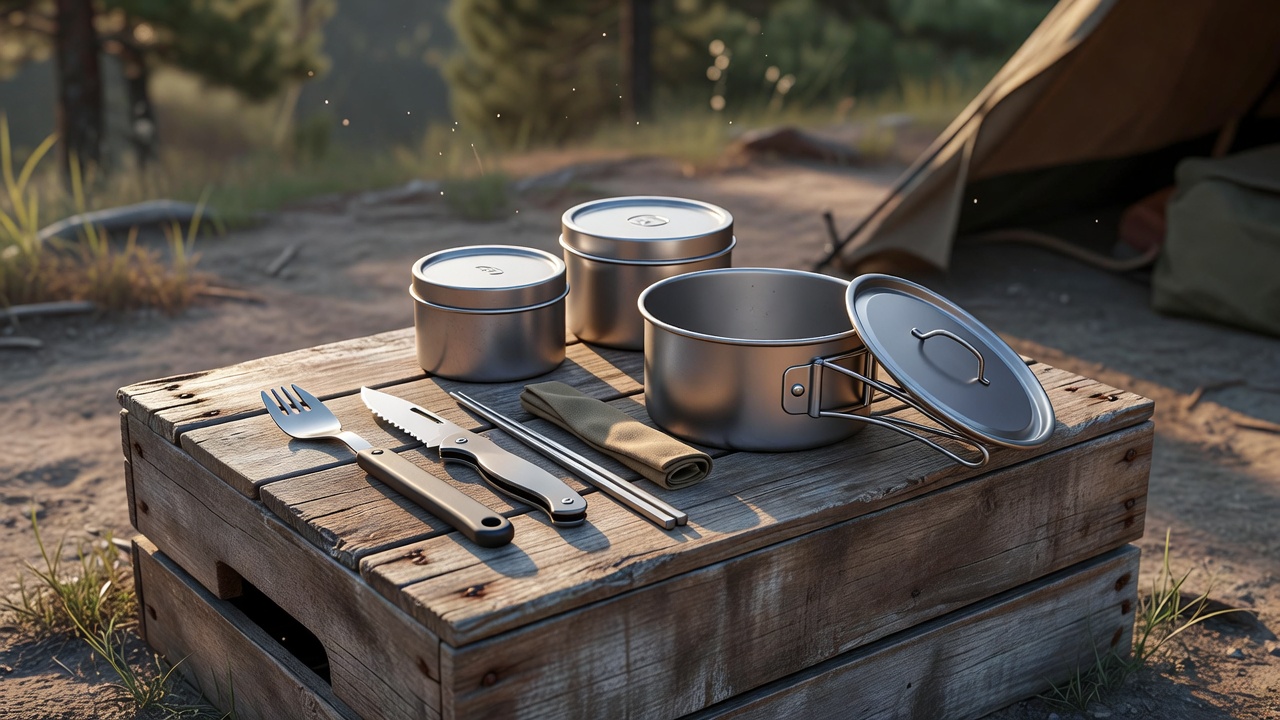
Lay out everything needed for a meal you already cook outdoors: a pot, lid, spoon, mug, washing bowl and a modest set of utensils. Add your cleaning supplies and rubbish bag. Leave fuel and the stove outside this first layout. Photograph the arrangement before shopping or cutting anything. The aim is to carry a coherent kit, not to fill every available space.
This project suits a campsite reached by vehicle or a short carry. A wooden crate can be heavier than a fabric kitchen bag. If you walk a long way, compare the empty crate with the bag you already own before investing effort. Better organisation is a useful result even when it does not reduce weight.
Choose materials with a known history
Look for a sound crate or shallow box with secure joints and no split handles. Reject wood with mould, chemical odour, oily staining or an uncertain industrial history. A treatment stamp does not establish that a reclaimed item is clean enough for kitchen use. Do not use unknown pallet wood as a chopping surface.
Put on the bench
- A clean, structurally sound crate and thin divider stock with known provenance.
- A removable washable tray or food-contact-rated container for utensils.
- Suitable short fasteners, a screwdriver, measuring tape and sandpaper.
- A rigid knife guard and lidded containers intended for food.
- Eye protection and appropriate dust control for the materials you work.
Keep reclaimed timber out of direct food contact. A washable insert should lift out without dismantling the box. Avoid permanent padding that can trap spilled food and dampness. Apply any finish only according to its instructions, allow the specified cure time and do not assume a decorative finish is suitable for food surfaces.
Build the organiser, not a stove enclosure
- Measure the packed contents. Arrange the largest item first. Leave finger space around it so you can lift it with cold hands.
- Mark removable divisions. Separate clean utensils from washing supplies. Keep heavy items low and close to the centre.
- Prepare the surfaces. Round accessible corners and smooth splinters. Check both sides of each fixing location before drilling.
- Fit the dividers. Use fixings suited to the actual stock thickness. No point should protrude into a handhold or equipment compartment.
- Add the washable insert. Make sure it can be removed while the other compartments remain loaded.
- Label the layout. A simple packing sketch under a removable lid helps the whole group return items to the right place.
Do not assume the lid can support cooking or sitting. A box that carries utensils is not automatically a stable workbench. If you need a table, use one rated for the intended load and position it on firm ground.
Separate storage from cooking
At camp, place the organiser away from the burner and any spark path. Remove the items you need, close the rest and cook on an appropriate stable surface. Follow the stove instructions for fuel connection, lighting and shutdown. Let equipment cool completely before packing; never place a hot stove into a wooden or fabric compartment.
Store fuel as directed by its manufacturer and local transport rules, not loose among cutlery. Food storage also depends on the destination. A wooden crate is not wildlife-resistant. In places with bears or other food-conditioned animals, follow the land manager’s storage requirements for food, rubbish and scented items.
Rehearse the whole evening
Load the crate at home, lift it a short distance over a clear surface and inspect the handles and base. Stop if joints move or the load is uncomfortable. Set the kit down on uneven ground, open it and check whether anything tips. Then cook your planned meal outdoors using your usual safe stove arrangement.
Wash and dry everything before repacking. Look for moisture under the insert and trapped crumbs in corners. If cleanup needs a special tool or takes longer than the meal, simplify the layout. Carry the loaded box once more: a kitchen that becomes awkward when a pot is wet still needs work.
Keep the first field use close to normal facilities. Take a fallback bag so a broken divider is a minor inconvenience. Record what you used, what you reached for twice and what stayed untouched. Remove unnecessary pieces after the trip rather than expanding the box.
Useful references and next steps
The National Park Service camping guidance is a starting point for destination preparation; individual park rules still matter. The Leave No Trace Seven Principles help frame food waste, washing and campsite care. Neither resource certifies this homemade organiser.