Reduce the problem before the weight
Empty your camping bag onto a table. Group items by the task they support rather than by how neatly they fit. Notice duplicates, snagging straps and tools buried under unrelated equipment. Removing an unused object often saves more weight than replacing a useful one with a fragile homemade version.
Weigh the complete arrangement, including pouches, buckles and repair supplies. A reclaimed material is not automatically lighter or lower impact if it wears out immediately. Aim first for predictable handling and repairability. These projects suit ordinary organisation; they are not for climbing, lifting people, securing vehicle loads or supporting a hammock.
Keep fuel together and above damp ground
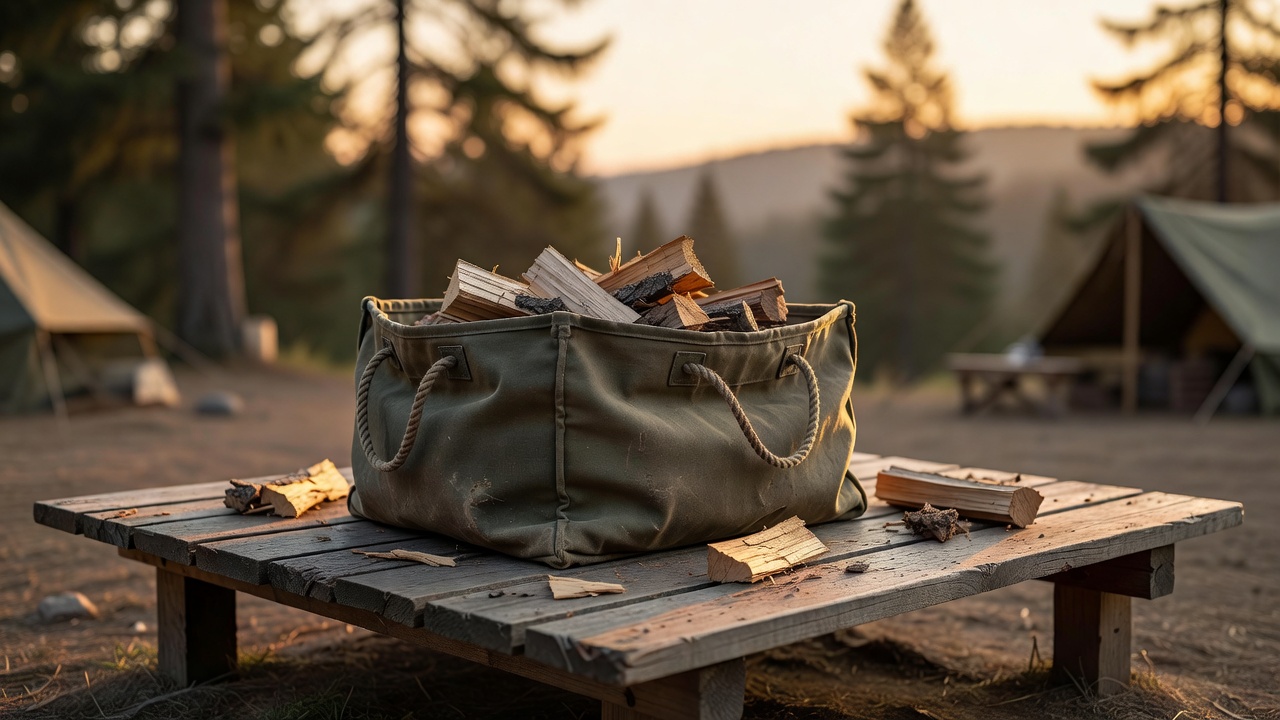
A small open-ended canvas sling can carry locally obtained firewood from a permitted supply point to your campsite. When laid on a stable existing raised surface, it can also keep short pieces gathered above damp soil. The fabric alone is not a waterproof ground barrier, and the carrier will not dry wet wood.
Use clean, strong woven fabric with known history and sound webbing. Reject sun-rotted cloth, brittle coatings and straps cut from retired safety equipment. Do not dismantle a climbing harness or seat belt to create a new role whose strength you cannot establish.
- Size around a small load. Lay out the short pieces you intend to carry and choose a fabric rectangle that folds comfortably around them. Avoid designing for the heaviest load you can lift.
- Finish the edges. Fold and hem the fabric so fraying is controlled. Use thread and needle appropriate to the material and your machine.
- Support the underside. Arrange two continuous webbing loops so they run beneath the load and form handles above it. Stitch them to the fabric for positioning; inspect all stitching before use.
- Keep the carry short. Load only a few pieces for the first test. Lift a few centimetres above a clear surface and stop if the cloth tears, seams move or handles distort.
- Set it down safely. Use a stable existing platform or another permitted dry storage location away from the fire. Do not improvise a tall, unstable wood rack.
This construction has no certified load rating. A home test does not establish one. Carry modest amounts close to the ground, keep feet clear and never suspend the loaded sling overhead. Remove splintered pieces carefully and inspect the underside for abrasion after every outing.
Sew one small utility pouch
A simple envelope pouch is a useful next step for a cable or tent-repair accessories. Put the contents on clean fabric, fold the material over and mark generous seam allowance. Sew the sides, finish the raw edges and turn the pouch out. Use an uncomplicated closure that can be repaired with the tools you actually carry.
Do not label ordinary fabric waterproof. For wet-weather storage of electronics or essential documents, use a suitable finished protective product and follow its closure instructions. A sewn organiser can sit inside it. Keep batteries out of situations where keys or metal tools could bridge exposed terminals.
For pegs, select a tougher material and protect sharp ends. For knives, use a proper rigid sheath or guard: a soft pouch is not puncture protection. Never use this pattern to make a fuel container, pressure vessel or heat-resistant stove cover.
Make inserts removable
A rounded divider cut from clean, suitable sheet material can keep a mug from rubbing against a pot. Measure the actual contents, cut away from your hands on a supported work surface and smooth every edge. Avoid unknown plastics near food, flame or heat. The insert should lift out so both it and the container can dry.
Short reusable straps can organise poles or a rolled mat, but should not become towing gear or vehicle restraint. Keep strap tails short enough not to snag. If a buckle cracks, retire it rather than relying on tape to preserve a critical closure.
Rehearse, then keep a repair note
Load each organiser and walk around home wearing your normal layers. Try opening it with cold or gloved hands. Place it on uneven ground and check whether contents spill. Wet fabric may stretch, bleed colour or take a long time to dry; test that at home before storing it beside sensitive items.
After the trip, brush out dirt, clean according to the material and dry everything fully. Record rubbed areas and repairs. Simplify a troublesome design before adding reinforcement everywhere. A project that continually needs attention may be less useful than the plain bag you began with.
Consult Don’t Move Firewood for pest-aware firewood advice and Smokey Bear for wildfire-prevention information. Destination rules and current fire restrictions take priority over any general project guide.